1. Scrapbook
  2. Archives
  3. Clips

Michael Merriam: ‘Brothel, Washington DC’

I always hesitate and breathe deeply before I tell any of these stories. I don’t really know what they mean. Looking back, despite all my understandable enthusiasm, I never really made it deep enough in. I thought for some reason that I grasped what was happening and what it meant, but now I see I failed to penetrate the place. I was like every journalist in Washington, that way.

Talking about nerds with Sarang Gopalakrishnan

Zachary Sachs:  Sarang is a friend and classmate presently working in the physics department at the University of Illinois at Urbana-Champaign.

Zach  Were you ever a chess-player ?

Sarang  shudder — no

Zach  No games at all then ?

Sarang  i play bridge, but only for social purposes.

i am also fond of random internet games of a mindless type, i was briefly good at boggle

Zach  Yeah I bet that came in real useful for the college years… Bridge-Pong.

The “Dummy” is whoever is no longer able to hold his cards

Sarang  haha i can hold my cards better than my drink

the problem with chess — which as far as i can tell is a fine game — and the rest of that is that i really am repelled by most aspects of nerd culture

Zach  Yes, chess culture suffered hideously after Bobby Fischer. I quit chess at a very early age because my dad was extremely good and I developed an intense inferiority complex about losing.

Sarang  yes that would do it too

Zach  You would love 19th-c. chess culture, very colorful

Sarang  i think you’re right — in general i think i would have been much more comfortable in victorian “nerd” circles

it is this “two cultures” thing. my view is that it’s a false equivalence

or perhaps not. i cannot entirely put my finger on why nerd culture is so consistently awful

Zach  It certainly is

It’s funny how even nerd culture has deep-rooted anti-intellectualism

Sarang  oh there isn’t an “even” about it

Zach  Right

Sarang  it is worse than all that; i mean a lot of nerds are firmly convinced that profs are all drudges and one should drop out of college and so on

Zach  For someone who thought nerd = smart kids, but it really doesn’t have much to do with that does it

Nor is it weirdo

Sarang  it is just another subculture

has to do with programming, video games, typically anime, comic books

superheroes, most often

Zach  I guess the thing that is so off-putting is it seems to be a complex of fetishes rather than any particular personal feature

Sarang  fantasy. yes

Zach  Even the interest in e.g. Star Wars or comic books seems to necessarily take on obsessive, fetish qualities

And then there are the fetishes qua fetishes which need not be named

Sarang  yeah

i wonder if what is so unpleasant about the nerd response to art is that they only like stuff that can be read the “wrong way” as it were

i am in some ways at the other extreme. i do not have much interest in myth

Zach  Hm I’m not sure I follow about the wrong way

I think they read Star Wars very patently in the meant way, which is disturbing only because it’s such blatant schlock

I am into myth but mostly of its template/trope qualities

The Bible and so on

Sarang  yes, i think “wrong way” only applies to things that can be read multiple ways

there is definitely a nerd canon of Good Literature though it consists largely of borges

Zach  Right and then Kafka (ha)

Eco

Neal Stephenson

William Gibson

Sarang  yes

Zach  Pynchon

Sarang  pynchon definitely

vonnegut

Zach  Yeah

Fantasy, again

Sarang  yup

Zach  Is there any word that describes the persuasion of being emotionally sensitive to one’s own actual plight and intelligent enough to engage it (in some sense) rather than e.g. fantasizing about something that doesn’t have to do with anyone’s plight?

The French, surely, have such a word

Sarang  it is a good question. i associate the idea with keats

(ironically!)

he said sth somewhere about the idea that you want to be able to handle horror w/o having it dull your sensibility

something about doctoring and phthisis

Zach  Medical doctoring?

Sarang  yeah

Zach  I’m amused that there’s a certain American wise man who always has “a small practice” the [William Carlos Williams] and so on

Countless others

Sarang  ha! yes

Zach  Did you really remember some obscure three-word phrase buried deep in “Cities of the Plain” ?

Sarang  ?

oh!

you mean the swann thing?

Zach  Yes

Sarang  no, i remembered something about a punchinello nose

Zach  Oh that makes more sense

Sarang  the three-word phrase was a cleaner more googlable version

Zach  About to finish that thing second time round

Much better at this age

Sarang  ha! wonderful

i have not really thought of rereading

it still lies in the too-recent past

ulysses will have to be done this summer, there are social necessities

Zach  He is sort of a twerp about girls sometimes but that probably has to do with the relationship prospects for a gay dude in his milieu

Sarang  i think the narrator is awfully good about not seeming overly sympathetic

Zach  Yeah

The making of Marilyn Monroe

I don't think I understand what he's saying about her estate but otherwise: yes; and as importantly, perhaps, it seems to me Rose, in the original article, distorts Marilyn the icon into what she wants it to be, rather than what it actually is or was.

As I measured the length and eloquence of Jacqueline Rose’s essay on Marilyn Monroe, I began to hope for that rarity, a detached, scholarly insight into Monroe (LRB, 26 April). I should have noted the first words of special pleading, from Monroe herself: ‘Like any creative human being, I would like a bit more control.’ Why do you have to be ‘creative’ to deserve more control? And isn’t it fanciful to claim that Monroe was the one star who got the better of the moguls? Her partnership with Milton Greene was prompted by Greene’s wish to protect her business ineptness (and promote himself). It led to two films: Bus Stop (her best work it seems to me, though not mentioned by Rose) and The Prince and the Showgirl, which is a mess. Nothing else came of Marilyn Monroe Productions. She failed the key test for stars of the 1950s: taking charge of their own careers. Rose may wonder why Elizabeth Taylor got ten times Monroe’s fee for a film. Was it that Taylor followed better advice? Or that she had a box office record (A Place in the Sun, Giant, Cat on a Hot Tin Roof) and an Oscar (BUtterfield 8)? That prize was charitable, but the generosity reflected the industry’s regard for Taylor. She was smart, hardworking, expert, on time and word-perfect since childhood. Richard Burton’s diaries tell how much he learned from her. Who reckons that Monroe could have attempted Martha in Who’s Afraid of Virginia Woolf?

Bette Davis and Olivia de Havilland had challenged and defeated the contract system. Katharine Hepburn contrived her own material as early as The Philadelphia Story. Ingrid Bergman made her bold journey to Italy to make ‘real’ films. Grace Kelly, Audrey Hepburn, Doris Day and Susan Hayward rode the studio attitudes of the 1950s without breaking down. Kim Novak was shy and limited as an actress, and vulnerable to male estimates that she was merely sexy. But she did The Man with the Golden Arm, Strangers When We Meet and Picnic – not great pictures, but worthwhile. And she was Madeleine and Judy in Vertigo. Does anyone believe Monroe could have done that film, or lived up to Hitchcock’s need to trap anguished actors in his taut frames?

Yet if Monroe could not generate her own projects, then surely it was up to her to seek the best opportunities available? That fits Judy Holliday, who sometimes reminds one of Monroe as the ‘dumb blonde’, Billie Dawn, in Born Yesterday. Holliday was not dumb, though she was neurotic, but in Adam’s Rib and Born Yesterday she found a democratic intelligence within the dumb blonde archetype that surpasses anything ‘Lincolnian’ in Monroe’s career.

There is an even more telling example of what could be done. When Arthur Miller’s play After the Fall had its debut in 1964, directed by Elia Kazan, the role of Maggie (plainly based on Marilyn) was taken by Barbara Loden. Kazan had had an affair with Monroe before her marriage to Joe DiMaggio, and in A Life he spoke fondly of her. But this inspired discoverer of performers did not make a film with or for Monroe, just as Lee Strasberg’s admiration for Marilyn’s reading of Anna Christie never led to a stage production. Had they realised that Monroe’s spasmodic glow (so magnificent in stills) was hardly viable in a complete dramatic context?

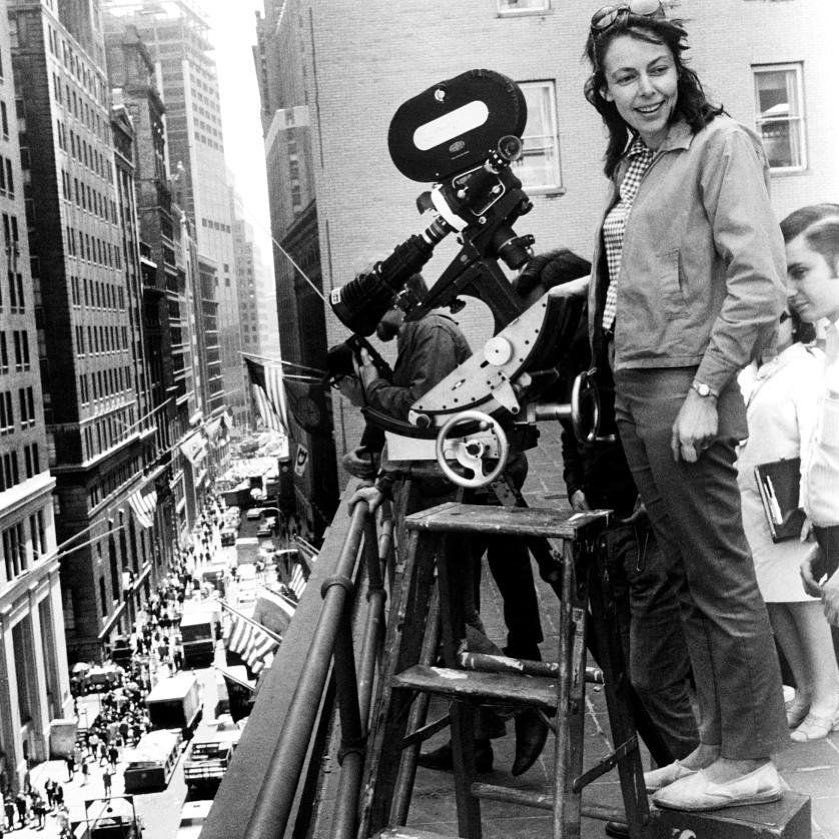
On the other hand, Loden wrote, directed and acted in a poignant, independent movie, Wanda, where she plays a fragile unsmart woman involved with a minor criminal. Wanda is a pioneering achievement, showing that an unfulfilled actress could do something for herself. Much the same applies to Gena Rowlands in A Woman under the Influence and her other work with John Cassavetes. Wanda cost only $200,000 but Loden needed six years to raise the money. She took control and responsibility. Monroe left an estate of just over $90,000, which ended up with the family of Lee Strasberg. Control in Hollywood is more frequent, and more complicated, than Rose allows.

David Thomson
San Francisco

Yeats, probably January 1939


James Thurber, ‘Our Own Modern English Usage: After Reading a Book on the Subject’

From The New Yorker, 5 January 1929.

The number of people who use “whom” and “who” wrongly is appalling. The problem is a difficult one and it is complicated by the importance of tone, or taste. Take the common expression, “Whom are you, anyways?” That is of course, strictly speaking, correct – and yet how formal, how stilted! The usage to be preferred in ordinary speech and writing is “Who are you, anyways?” “Whom” should be used in the nominative case only when a note of dignity or austerity is desired. For example, if a writer is dealing with a meeting of, say, the British Cabinet, it would be better to have the Premier greet a new arrival, such as an under-secretary, with a “Whom are you, anyways?” rather than a “Who are you, anyways?” — always granted that the Premier is sincerely unaware of the man’s identity. To address a person one knows by a “Whom are you?” is a mark either of incredible lapse of memory or inexcusable arrogance. “How are you?” is a much kindlier salutation.

The Buried Whom, as it is called, forms a special problem. That is where the word occurs deep in a sentence. For a ready example, take the common expression: “He did not know whether he knew her or not because he had not heard whom the other had said she was until too late to see her.” The simplest way out of this is to abandon the “whom” altogether and substitute “where” (a reading of the sentence that way will show how much better it is). Unfortunately, it is only in rare cases that “where” can be used in place of “whom.” Nothing could be more flagrantly bad, for instance, than to say “Where are you?” in demanding a person’s identity. The only conceivable answer is “Here I am,” which would give no hint at all as to whom the person was. Thus the conversation, or piece of writing, would, from being built upon a false foundation, fall of its own weight.

A common rule for determining whether “who” or “whom” is right is to substitute “she” for “who,” and “her” for “whom,” and see which sounds the better. Take the sentence, “He met a woman who they said was an actress.” Now if “who” is correct then “she” can be used in its place. Let us try it. “He met a woman she they said was an actress.” That instantly rings false. It can’t be right. Hence the proper usage is “whom.”

In certain cases grammatical correctness must often be subordinated to a consideration of taste. For instance, suppose that the same person had met a man whom they said was a street cleaner. The word “whom” is too austere to use in connection with a lowly worker, like a street-cleaner, and its use in this form is known as False Administration or Pathetic Fallacy.

You might say: “There is, then, no hard and fast rule?” (“was then” would be better, since “then” refers to what is past). You might better say (or have said): “There was then (or is now) no hard and fast rule?” Only this, that it is better to use “whom” when in doubt, and even better to re-word the statement, and leave out all the relative pronouns, except ad, ante, con, in, inter, ob, post, prae, pro, sub, and super.

Lorine Niedecker, 1970

image

003.19.164, the Historic Fort Atkinson Collection, University of Wisconsin Library

Hugh Kenner on the OED

Set promised trouble as early as 1881, when James Murray, the chief editor, came to doubt if the language contained a more perplexing word. An assistant had already spent forty hours on it, and Murray anticipated forty hours more. Set (the verb) was completed more than three decades later, and the time its final arrangement took Murray’s chief associate, Henry Bradley, was something like forty days, in the course of which he improvised twelve main classes with no fewer than 154 subdivisions, the last of which (set up) required forty-four further subsections. The result, a treatise two-thirds as long as Paradise Lost, is from most points of view a triumph of ingenious uselessness, reminiscent of Yeats’s A Vision in being nearly impenetrable through sheer complexity of classification. Someone who had heard of hunters “setting” to fowl would toil long and hard through those columns en route to his quarry, low down in the final clause of #110: “set: to get within shooting distance by water.”

Interview with Michel Houellebecq

INTERVIEWER Why don’t you live in France? 

HOUELLEBECQ Partly to pay fewer taxes and partly to learn your beautiful language, madam. And because Ireland is quite beautiful, especially the west.

INTERVIEWER Not to escape your own country?

HOUELLEBECQ No. I left in full undisputed glory without any enemies.

INTERVIEWER And what do you think of this Anglo-Saxon world?

HOUELLEBECQ You can tell that this is the world that invented capitalism. There are private companies competing to deliver the mail, to collect the garbage. The financial section of the newspaper is much thicker than it is in French papers.

The other thing I’ve noticed is that men and women are more separate. When you go into a restaurant, for example, you often see women eating out together. The French from that point of view are very Latin. A single-sex dinner would be considered boring. In a hotel in Ireland, I saw a group of men talking golf at the breakfast table. They left and were replaced by a group of women who were discussing something else. It’s as if they’re separate species who meet occasionally for reproduction. There was a line I really liked in a novel by Coetzee. One of the characters suspects that the only thing that really interests his lesbian daughter in life is prickly-pear jam. Lesbianism is a pretext. She and her partner don’t have sex anymore, they dedicate themselves to decoration and cooking.

Maybe there’s some potential truth there about women who, in the end, have always been more interested in jam and curtains.

INTERVIEWER And men? What do you think interests them?

HOUELLEBECQ Little asses. I like Coetzee. He says things brutally, too.

INTERVIEWER You’ve said that you possibly had an American side to you. What is your evidence for this?

HOUELLEBECQ I have very little proof. There’s the fact that if I lived in an American context, I think I would have chosen a Lexus, which is the best quality for the price. And more obscurely, I have a dog that I know is very popular in the United States, a Welsh Corgi. One thing I don’t share is this American obsession with large breasts. That, I must admit, leaves me cold. But a two-car garage? I want one. A fridge with one of those ice-maker things? I want one too. What appeals to them appeals to me. 

François Truffaut with bubble-blowing Dumbo toy